
Foaming 50% glass-filled nylon 6.
Optimizing cell morphology and glass fiber distribution in one of the hardest materials to foam well — and coming out lighter, faster and tougher than the solid part.
Glass fiber and foam fight each other.
Glass-reinforced nylon 6 is used wherever stiffness, strength and durability are non-negotiable. Foaming it is another matter — conventional approaches give uneven cells, poor fiber distribution and inconsistent mechanical performance.
Four things have to hold at once: uniform fiber distribution, a fine and consistent cell structure, mechanical performance at high density reduction, and stable processing.
A formulation engineered for this material.
Moxietec developed a proprietary foaming additive package specifically for high-temperature processing of highly glass-filled PA6.
A fine, uniform cell structure — with the fibers still where they should be.
SEM analysis confirmed an exceptionally fine and uniform cellular structure combined with excellent glass fiber distribution throughout the foamed part.
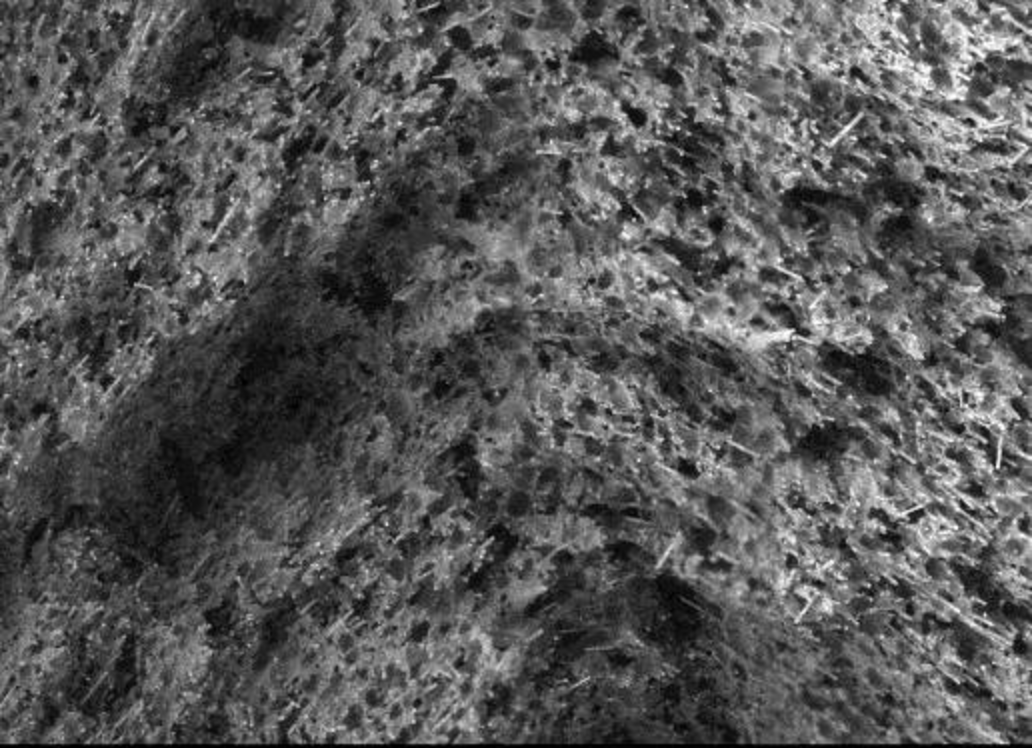
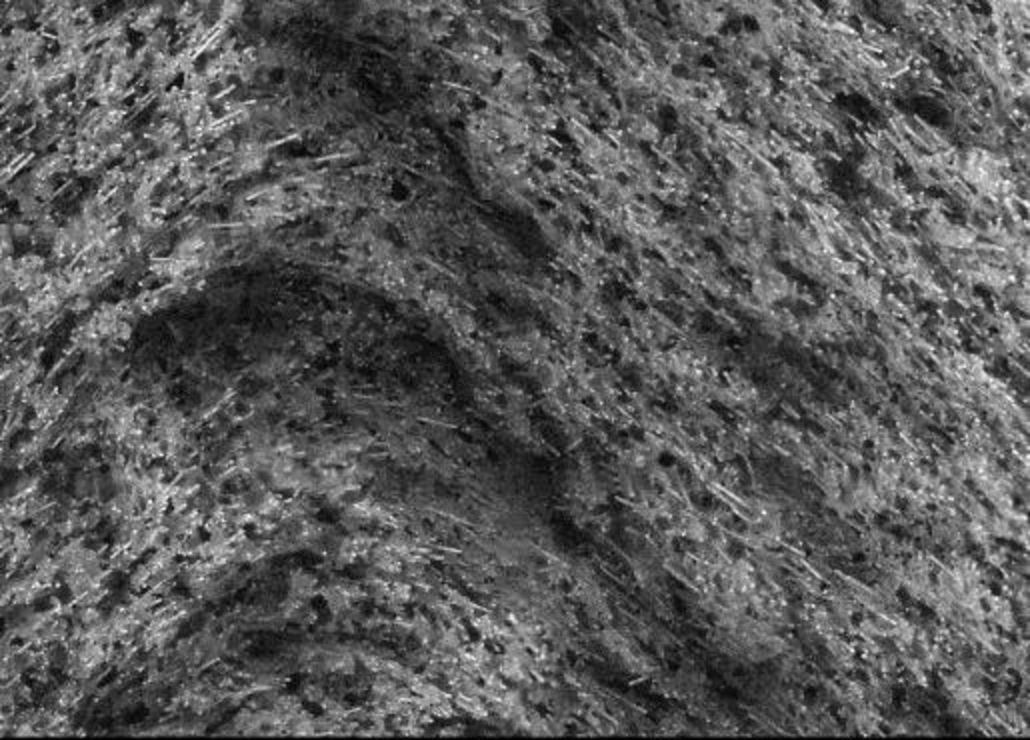
An even cell structure means predictable behavior part to part.
Localized stress risers are reduced, not moved somewhere else.
Improved over the solid part — a real problem in filled nylon.
28% less material. More impact energy absorbed.
This is the result that surprises people. Foaming normally costs you impact performance. Tested head to head against the solid baseline at matched impact conditions, the foamed part absorbed 28% more energy before total failure — and passed 39% less peak force through to whatever sits behind it.
For a structure carrying actuators, bearings or electronics, that second number matters as much as the first. The part takes the hit instead of transmitting it.
Your part, your resin, your numbers.
This was one part in one material. Tell us what you are molding today and we will tell you what foaming would — and would not — do for it.