↑
Moxietec — The Future of Foam
Turnkey · prototype to production

Fast.

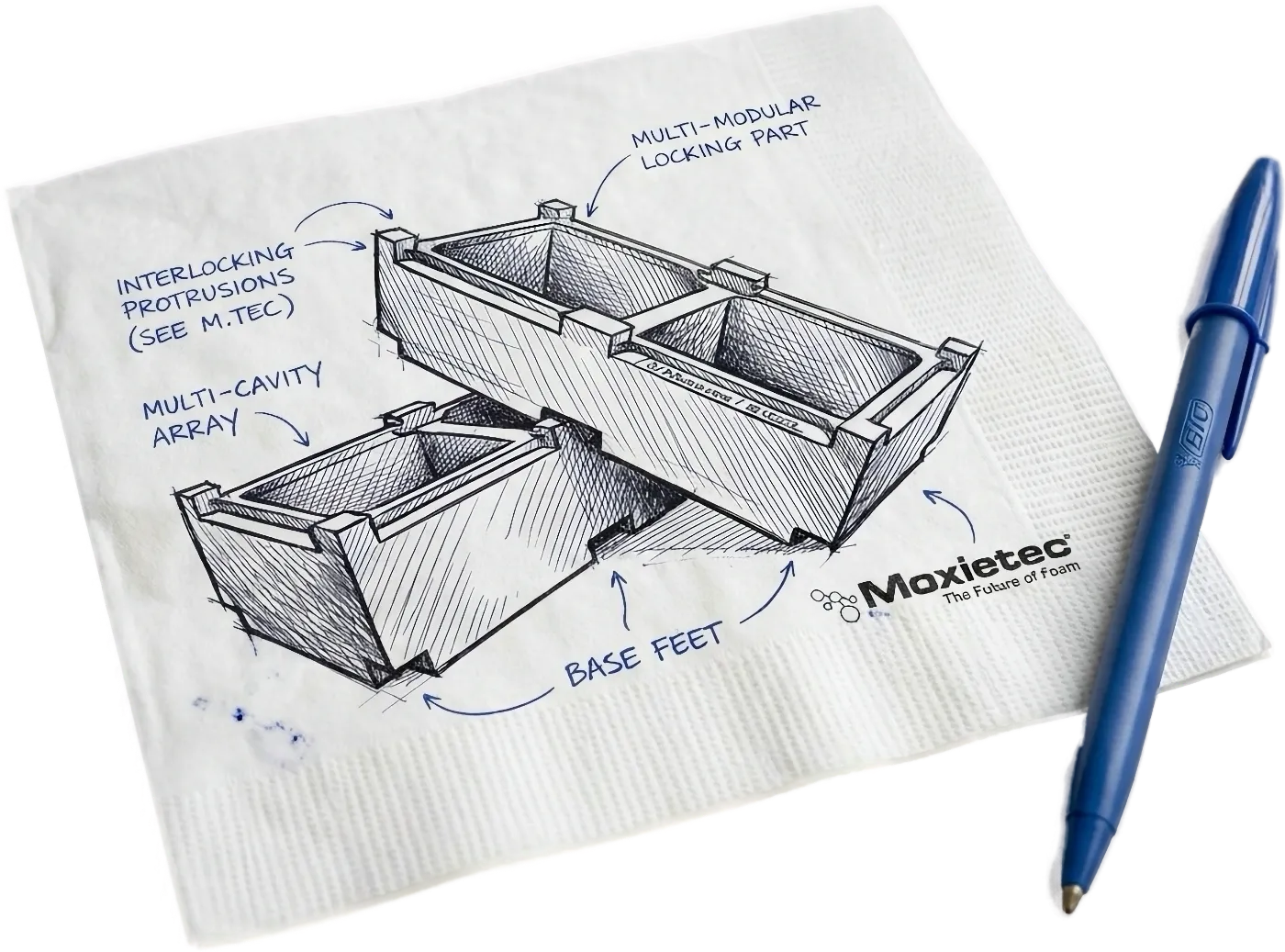
Bring us a sketch on a napkin. Four weeks later you are holding foamed production parts — design, formulation, mold and process, all under one roof.
What turnkey actually buys you:
Time.
2–3 weeks to build you a new tool — not months.
Money.
Mold modifications machined in-house — not quoted, shipped and waited on.
A pencil sketch of the locking block on a napkin
Day 1Your sketch
4
weeks
→
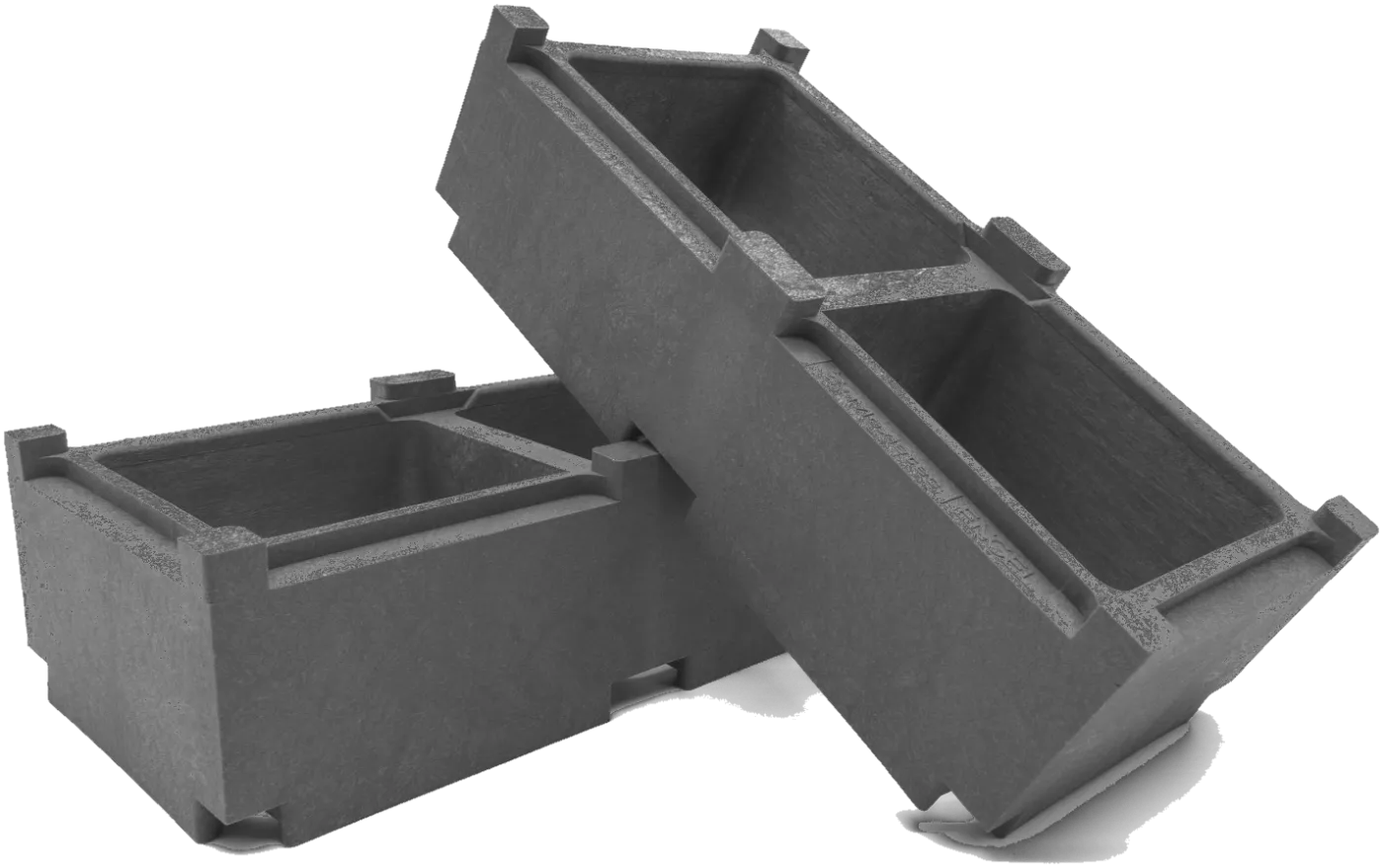
The molded, foamed locking blocks
Day 28Foamed production parts
Vertical integration

Concept to production in 4 weeks.

Four vendors means four queues, four quotes and four people to chase. One roof means every step overlaps the next.
Week 1
Week 2
Week 3
Week 4
01Formulation development
02Product design
03Mold design
04Mold manufacturing
05Testing & analysis
→Production
First production parts ≤ 4 weeks
Testing runs throughout — resin, plaques and first-shot parts are measured in-house as they are made.
Timings depend on part complexity and whether a new tool is required. Ask us for a schedule against your part.
Company overview

Who is Moxietec?

Based in Pennsylvania, Moxietec® develops foaming technology for injection-molded and extruded plastics. ISO 9001 registered.

A turnkey partner. From concept to a full production line — run at Moxietec or dropped into your plants. Or bring us your current part and tool.

The goal: lighter parts, less resin, faster processing — with strength maintained or improved.
50,000sq ft
One facility — lab, tooling and production
126+
Patents issued and pending — protecting your parts from imitation
24+
Countries with IP protection
Grove City, PA
Headquarters, lab and plant · ISO 9001 registered
2nd production facility broke ground August 2026
We put nothing in your parts. Billions of times, consistently.
What vertically integrated actually means

Bring us a sketch on a napkin. We will take it to a production line.

A concept, a CAD file, or a part you already mold today — we pick it up wherever it is. Product design, formulation development, mold design and mold manufacturing all happen on one campus in Pennsylvania, USA. No hand-offs between vendors, and nothing subcontracted.

And if you want the line automated — machine, mold and automation cell together — we can build you that too.

See how that runs, concept to production →
A pencil sketch of a part on a napkin
Where we have done it

A track record in high-tech, value-added parts.
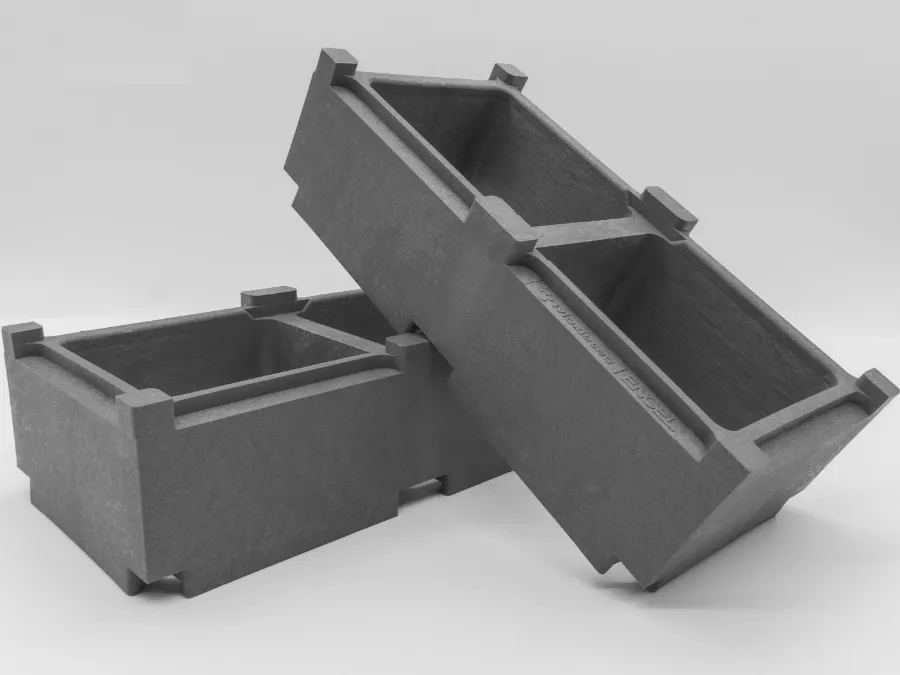
Moxietec foamed structural locking blocks
Building & construction
Structural blocks, less resin per unit

Thick-walled, stiffness-driven parts where the foamed core takes out material — and improves compression strength and dart-drop impact.
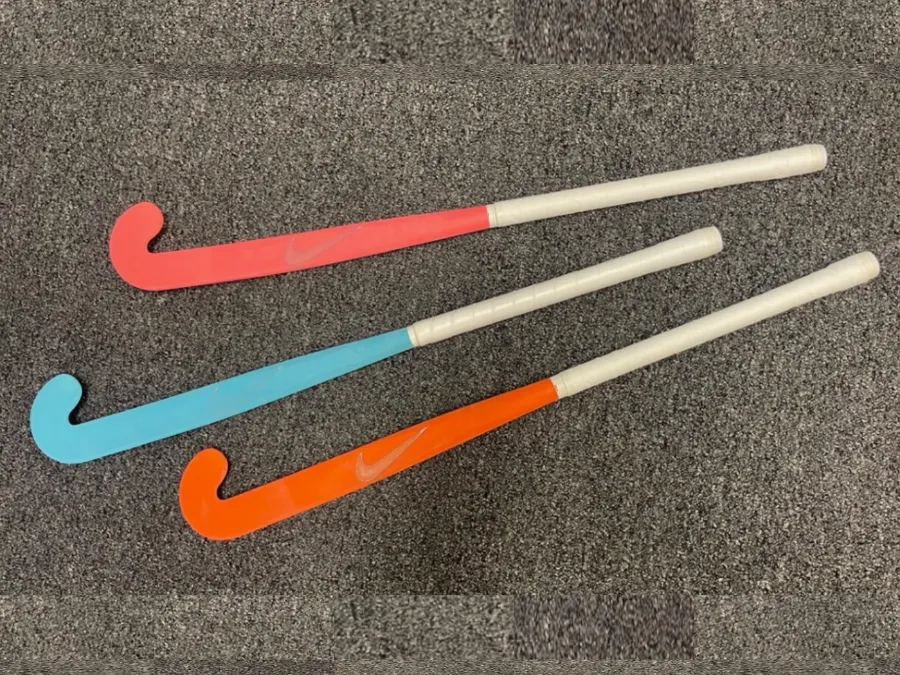
Foam-molded field hockey sticks
Sporting goods
Impact protection with a finished face

Energy absorption and a cosmetic surface delivered in a single molded part, replacing a multi-piece assembly. We help make the world's strongest contact sports equipment.
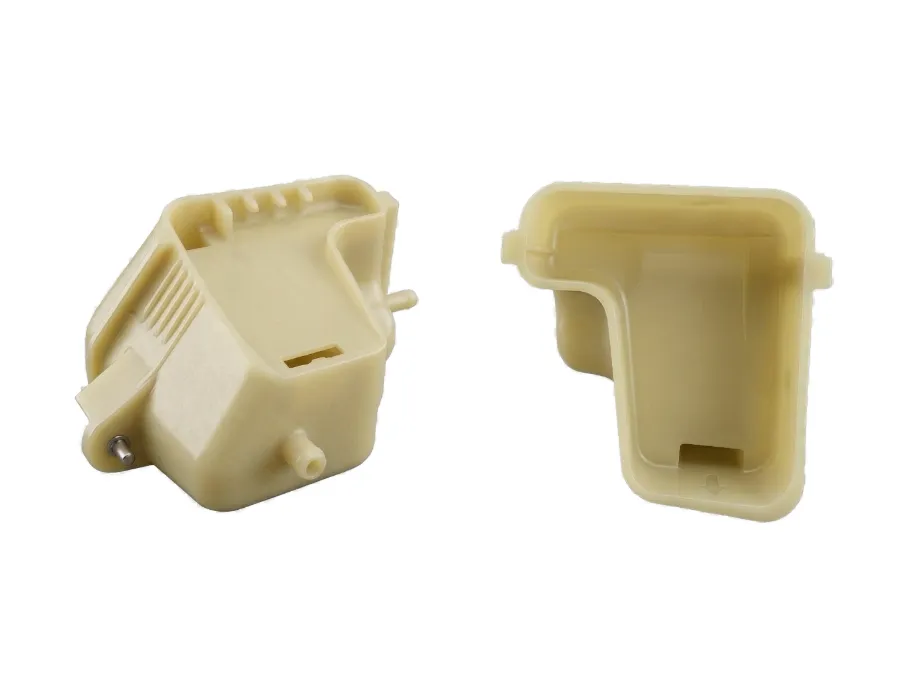
Foamed automotive coolant reservoir
EV & automotive
Mass out of moving assemblies

Weight removed from parts that move constantly, without giving up the stiffness the assembly depends on.

On the show floor

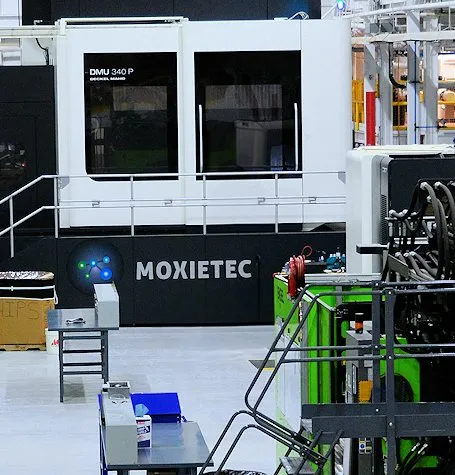
We do not just say fast. We mold it live, on ENGEL® machines.

In 2025 we ran joint demonstrations of foam injection molding on ENGEL® equipment at two shows — K Show in Düsseldorf and PT Expo. Moxietec brought the technology; ENGEL® brought the machine. Foamed parts came off the press in front of the crowd.

Next, we are taking it on the road to NPE — come see our technology run, and hear how it works.
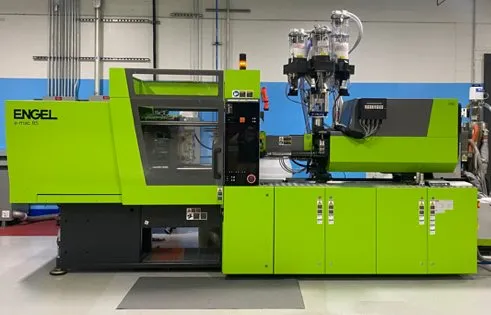
An ENGEL injection molding machine on the Moxietec floor
ENGEL
A top global OEM in injection molding machinery.
Catch us in person
Bring a part. We will bring the coffee.
Book a slot before the show and we will set aside time at our booth or session — bring samples, drawings or a part you want lighter.
4 events · Nov 2026 – May 2027
11–12
Nov 2026
Next up
AMI® Plastics World Expo
Huntington Convention Center · Cleveland, OH
With Lignetics Group. Talk formulation, masterbatch and foaming additives.
2–3
Dec 2026
ENGEL® foammelt Days
ENGEL® headquarters · Schwertberg, Austria
Invited speaker on foam injection molding, with live demos in the ENGEL® technical center.
23–25
Mar 2027
TechConnect® World
Hynes Convention Center · Boston, MA
Invited keynote.
Any day
Grove City, PA
Can't make a show? Visit us instead.
Moxietec headquarters · Grove City, PA
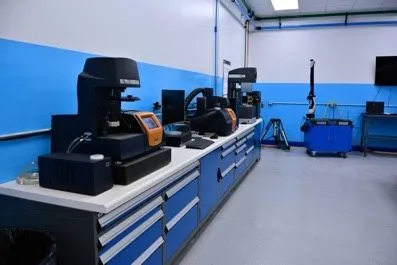
The test lab and the molding floor are open to customers year-round. See foam injection molding first hand, our testing equipment in action, and see our CNC machine in action building molds up to 10 × 10 × 5 ft.
3–7
May 2027
Flagship show
NPE2027 · The Plastics Show
Orange County Convention Center · Orlando, FL
W1700West Building — running live in ENGEL®’s booth
W681West Building, Level 2 — Expo Hall & Meeting Rooms
SP26West Building, Level 2 — Expo Hall & Meeting Rooms · Sustainability Park
Invite us to speak
Request our CTO, Abolfazl Mohebbi, PhD, to speak at your event.
Email solutions@moxietec.com with the event and request details.
Request a speaker →
Now — what is this technology?

Foaming, and why ours is different.
Solid wall
Solid resin throughout. Every gram carries load — most of it needlessly.
Foamed wall
Micro-cellular foam core, magnified
Solid skin, closed-cell core. Same outer surface, less mass inside.
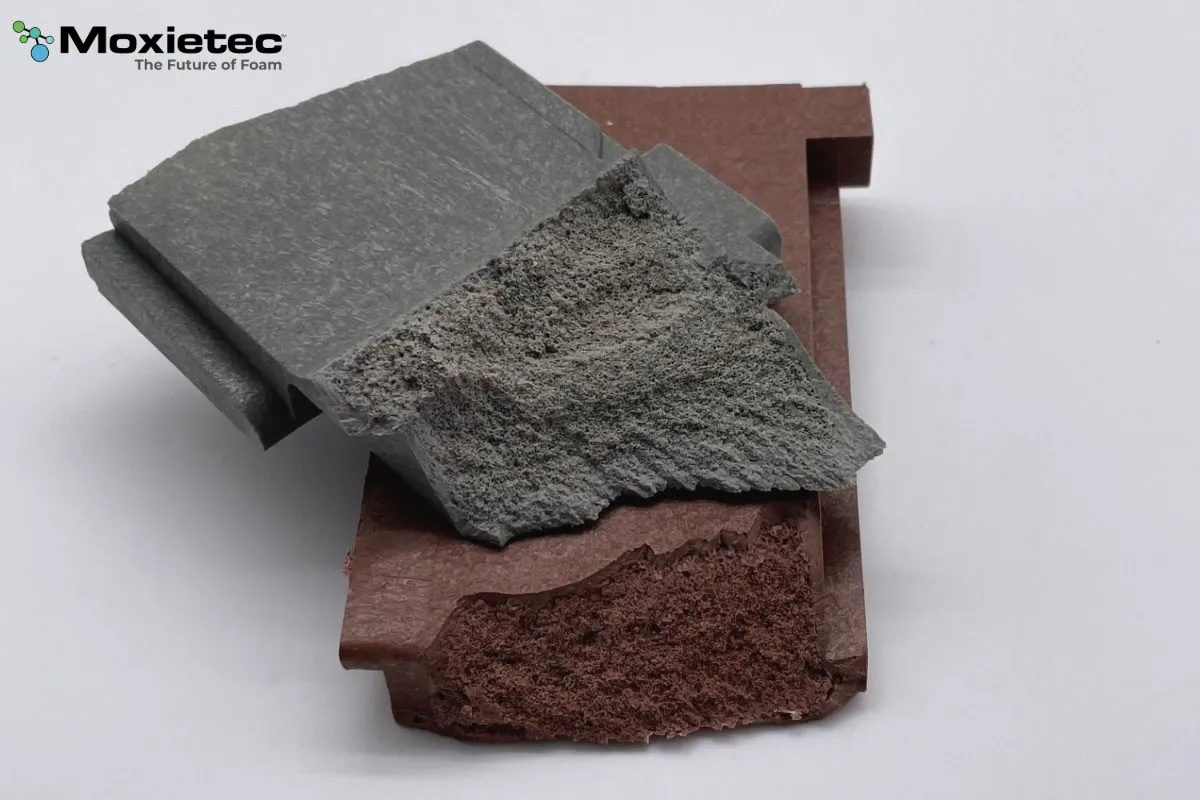
The same thing in a real part
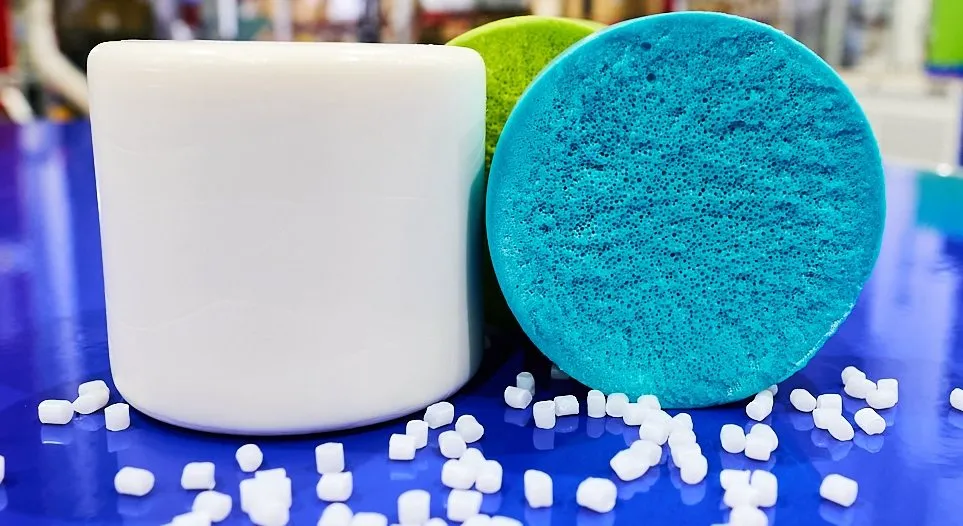
Two molded blocks broken open, showing a solid outer skin and a cellular core
Two molded blocks broken open. The outer surface is solid and finished; the core is cellular all the way through.

As the part is molded, a controlled cellular structure forms inside the wall. The skin stays solid and cosmetic. The core becomes a honeycomb of tiny closed cells.

You remove material from where it does the least work — so mass and material drop while stiffness stays where the part needs it.
Measured on a 50% glass-filled nylon 6 part
28%
lower density
15%
shorter cycle time
+28%
more impact energy absorbed than solid, with 39% less peak force transmitted
Lighter, faster to mold, and it took more impact energy than the solid part it replaced. Glass-filled nylon is one of the hardest materials to foam well — fiber distribution and cell structure fight each other.
Moxietec case study: highly glass-filled PA6 (50% GF). Dart impact tested against a solid baseline.
Solid and foamed, side by side
The same part molded two ways. On the left, conventional and solid. On the right, foamed and sectioned — the closed-cell core replaces the material the part does not need.
A conventional solid part beside a foamed part sectioned to show its closed-cell core
Left: conventional — solid throughout, full mass.
Right: foamed — closed-cell core, same outer form.
Not all foam is the same

Conventional foaming gives you large, irregular, connected voids — which is why it has a reputation for weakening parts. Moxietec's formulations produce small, uniform, closed cells. Same idea, different physics, opposite result.
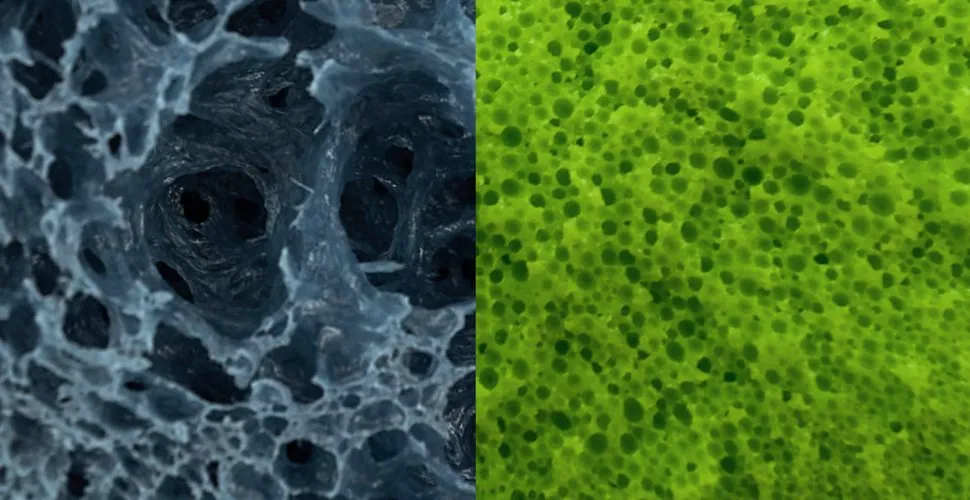
Coarse irregular cells of conventional foam beside the fine uniform cells of Moxietec foam
Broken open — finished outer surface, cellular core.
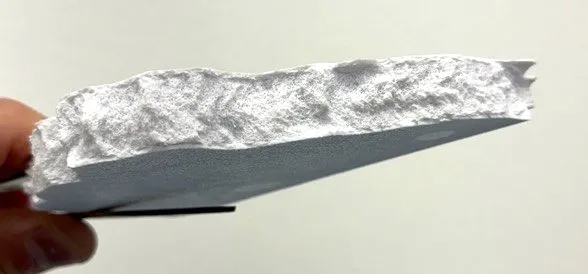
Torn edge showing solid skin over a foamed core
A torn edge — solid skin top and bottom, cells through the middle.
Conventional foam Moxietec foam
It holds a screw better than solid

The first question an engineer asks about a foamed core is whether it will hold a screw. The answer surprises people: pull-out strength goes up, not down. The cell walls give the thread thousands of edges to grip, where solid material offers one smooth face. Tested across fastener types as part of process development.
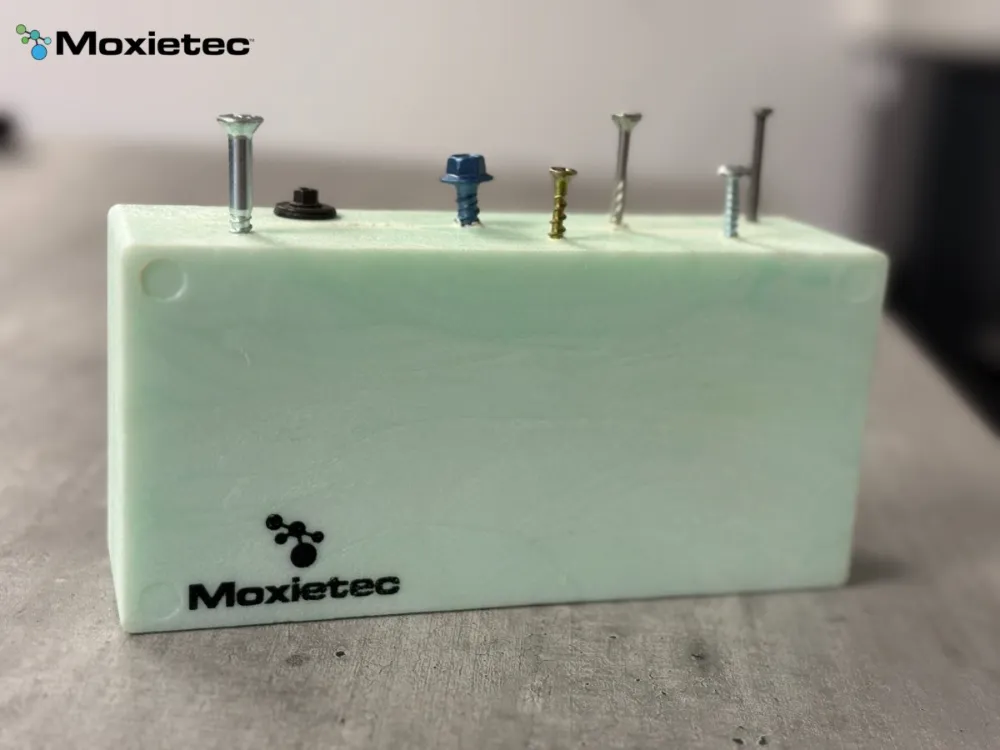
A foamed Moxietec block with six different screws and fasteners driven into it
Pull-out testing on a foamed block, across six fastener types.
Cell structure is engineered, not accidental
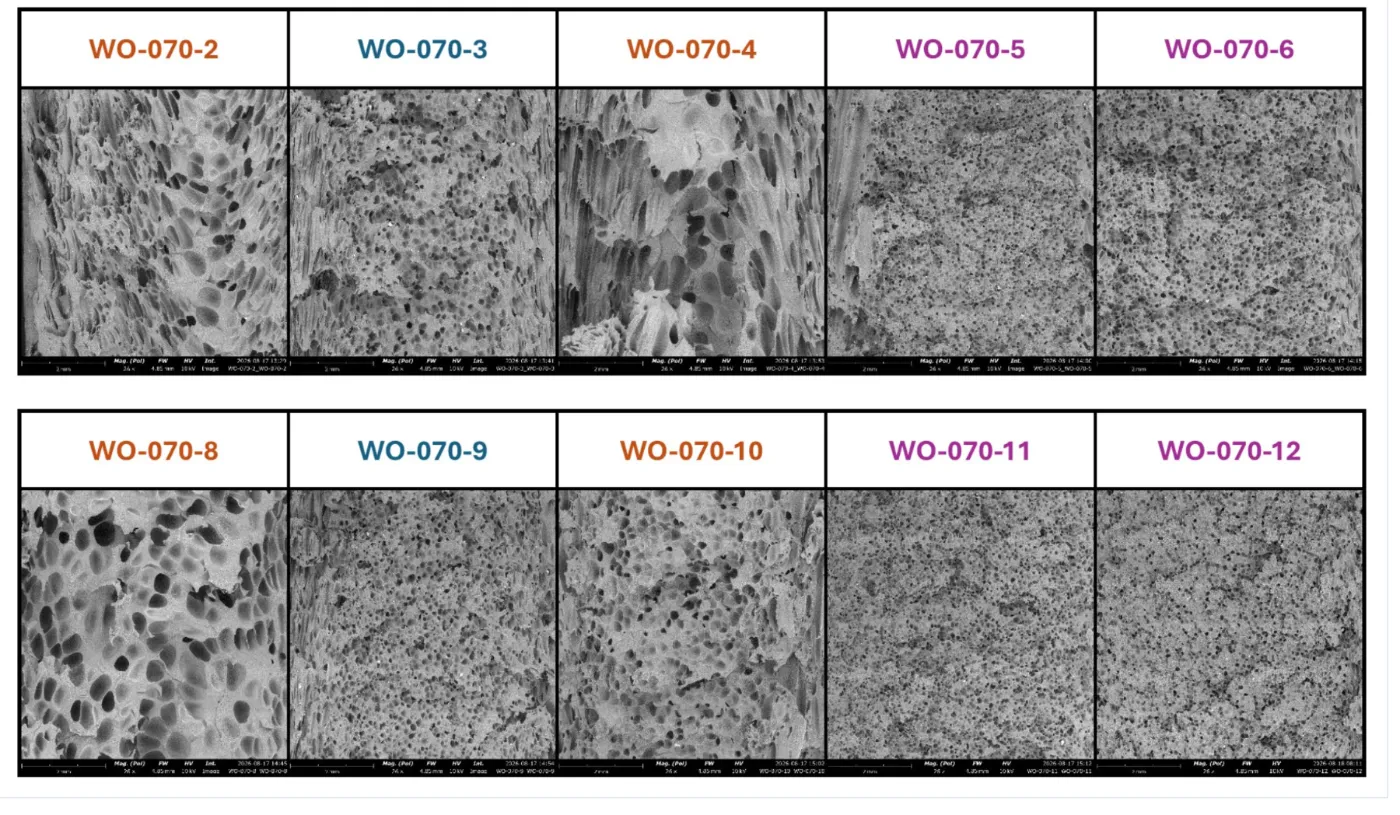
One resin, twelve formulations to reach the right custom PFA — ten of them shown here, SEM at 2 mm scale. As the custom formula is tuned to the resin and the part requirements, cell size drops and the structure becomes uniform. Number 11 was the one.
SEM cross-sections of ten foamed formulation variants, WO-070 series
Coarse, elongated cells

Early packages: large voids, thin walls between them, structure that varies across the section.

Fine, uniform cells

Tuned packages: small cells, consistent distribution — that fine, even cell wall is what carries load and impact energy at reduced density.

Why it matters to you

This is the work an evaluation does — your resin, your geometry, screened before anything trials at your plant.

What this actually takes

The additive is where it starts. It is not where it ends.

Our PFA does the hard chemistry — nucleating a fine, even cell structure in resins that fight it. But no additive can tell you what temperature, pressure and injection speed your part needs. Those settings are intellectual property in their own right, developed part by part, and they are what turn a strong formulation into a part that performs.

It runs on standard injection molding equipment — no special press, and existing tooling can often be used as it is. When a new tool is being built, we design the mold for the process too, so nothing is left to chance.

See how that runs, concept to production →
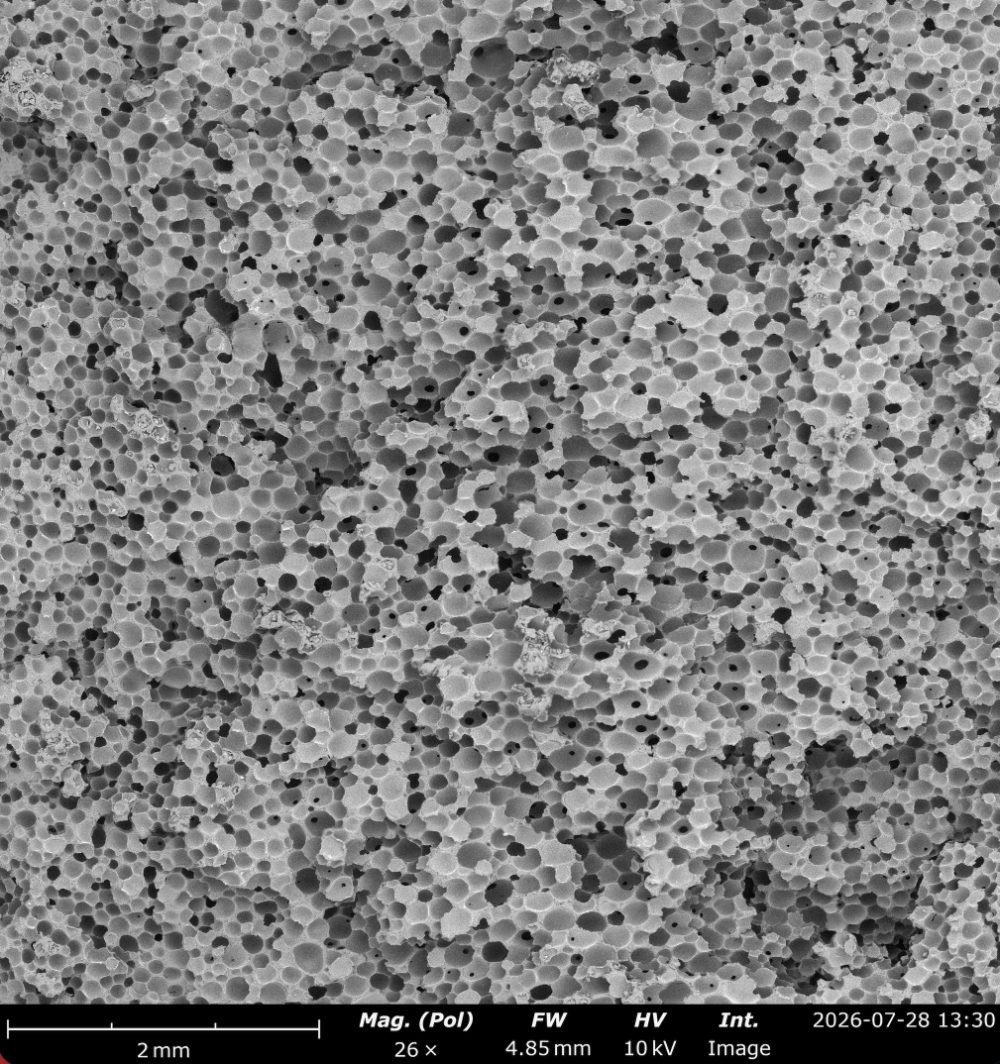
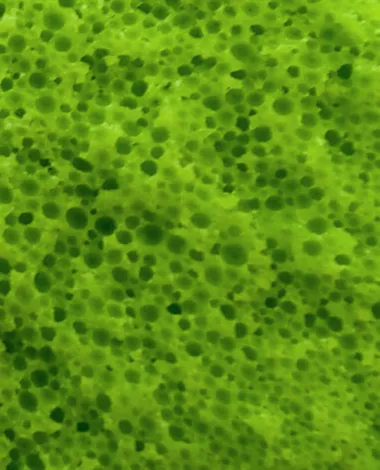
SEM image of a foamed part at 26× magnification, showing fine, closed cells
Foamed part, SEM 26× — fine, even cells nucleated by Moxietec® PFA. 2 mm scale.
Turnkey — one
Mold design

The tool is designed for the foaming process from the first sketch — gating, venting, cooling and surface decided together.

Turnkey — two
Formulation development

Not a product off a shelf. The PFA is formulated for your resin, your wall thickness and your target density — and it is one element inside the formulation, not the whole thing.

Two customers on the same resin get two different formulations — each tuned to raise part performance and lower molding cost. That is the difference between buying an additive and being given a technology.

Turnkey — three
Process development

Temperature, pressure, injection speed — established part by part, documented, and repeatable on production equipment.

It runs in the resins you already use
Including high-temperature engineering resins, where foaming is hardest and the weight is worth the most.
Nylon (PA6, PA66) Glass-filled to 50% PPS Liquid crystal polymer Polycarbonate PC/ABS Polypropylene Polyethylene Polystyrene TPU PVC Recycled feedstocks
Filled or unfilled, virgin or recycled. Bring us your material and we develop the formulation around it — we do not ask you to change resin to suit the process.
Technology benefits

Why it matters to you.

Seeing is believing

Same part. Same drop.

On the left, a large molded panel in the customer's standard formulation. On the right, the same part foamed with Moxietec® PFA.

Lighter — and it holds up.

01
Faster cycles
Less mass in the core, less heat to pull out. Up to 39% shorter cycle.
02
No warpage
Fine, uniform cells shrink evenly. Low residual stress, flat parts.
03
Strength kept or increased
A solid skin over a cellular core works like an I-beam: stiffness per gram goes up.
04
No sink marks
Core gas pressure packs the melt to the wall as it cools — no long hold.
05
Lighter weight, less resin
Cells replace resin in the core: ≈28% density reduction in 50% glass-filled PA6.
06
Less scrap
No sinks, no warp, a stable process — fewer rejected parts.
07
Recyclable
Still a thermoplastic — grind and recycle it like solid.
See it in your part.
Start my part →
Turnkey solutions provider

Every capability in-house. One team, one building.

Formulation, product design, mold design, mold manufacturing and a fully equipped test lab all sit on one campus. One-stop shop, one accountable partner, no hand-offs between vendors.

01
Formulation development
Custom PFA formulations, compounded in-house on a 27 mm Leistritz twin-screw.
02
Product design
Geometry engineered for a foamed wall from the first sketch.
03
Mold design
Gating, venting, cooling and surface decided together.
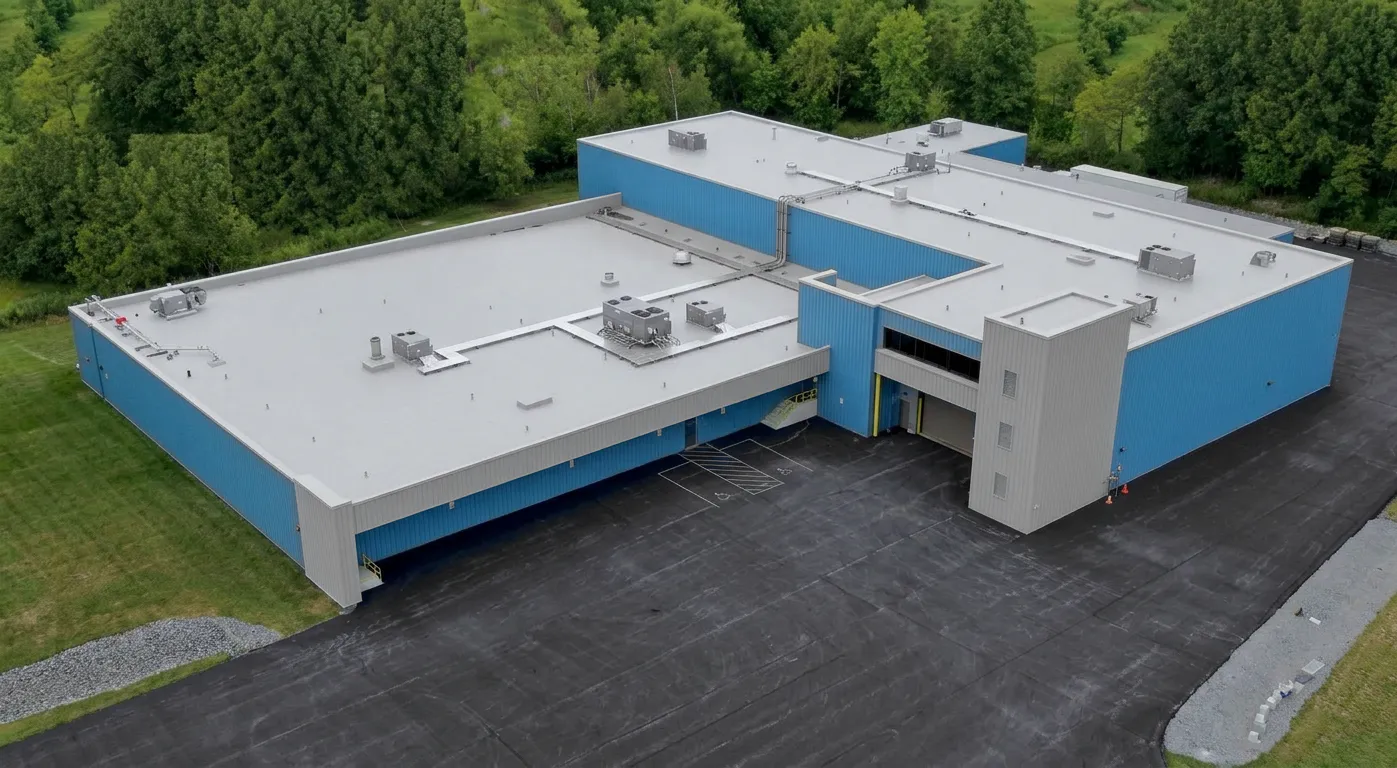
The Moxietec campus, aerial view
Moxietec
50,000 sq ft · Grove City, PA
04
Mold manufacturing
Five-axis machining on our own floor — molds up to 3.0 × 3.0 × 1.5 m.
05
Processing
Six ENGEL® presses, 85–1000 t, with the Moxietec® Shut-Off Nozzle.
06
Testing & analysis
Mechanical, thermal and rheology testing, plus SEM microscopy.
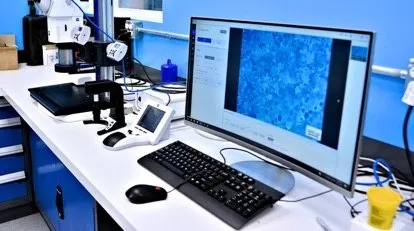
Cell structure being measured at the microscope
Cell structure analysis. Every formulation is imaged and measured in-house — cell size, wall thickness, skin depth.
Five-axis machining centre on the Moxietec floor
Mold manufacturing. Tools are cut on our own five-axis machining centres — the step most suppliers send out.
Instron test frame in the Moxietec lab
Mechanical testing. Impact and load performance verified against a solid baseline before anything is claimed.
Concept to production

From a part concept to a running production line.

Most suppliers own one box in this diagram and hand you to someone else for the rest. We own all of them — and with ENGEL® we can deliver the machine and the line too.

01
Your concept

A part, a target weight, a target stiffness. Or just a problem.

02
Product design

Geometry engineered for a foamed wall from the first sketch.

03
Formulation development

Formulation developed and validated in our lab.

04
Mold design & manufacture

Tool designed and cut on our own floor. Not sent out.

05
Process development

Settings proven on the machine, then locked in.

06
In production

A validated tool and a repeatable cycle — on your floor or ours.

Moxietec, in-house, one campus
your input
your production
Start wherever you are

A sketch, a CAD file, or a part you already mold today — we pick up from there.

Nothing is subcontracted

Formulation, design, tooling and process all sit with one accountable team — so when something needs to change, it changes.

Or take the whole line

We can develop the part. Or the entire production line that makes it.

Whatever it takes to get your product on the shelf.

Machine, mold, foaming formulation, process settings and the automation cell around it — specified, built, installed and validated as one package, with ENGEL®. Others assemble a line from equipment they buy in; the lightweighting technology inside ours is our own. You get a line already making good parts, not a pile of equipment and four suppliers to coordinate.

Injection molding machine
Mold, designed and cut here
Foaming formulation and process
Automation cell
Commissioned and validated
Start here

Bring us the part you most want to make lighter.

Send us the part. We will assess it against our foaming technology and come back with whether it is a fit, and what the weight and cycle-time reduction would be. If it is, we can take it from there — to trial, to tool, to production.

Start the conversation →
Seeing is believing
Four ways to check this for yourself, in order of effort.
01
Run your own numbers
Put your part’s weight and resin into the Foamulator and see the saving. futureoffoam.com →
02
Read the case study
50% glass-filled nylon 6, foamed: 28% lighter, 15% faster to mold, higher impact energy than solid. Read it →
03
Hold the difference
We mail two identical molded plaques — one solid, one foamed — with both weights on the card.
04
Run it on your own part
A trial on a part you already mold, in your resin, on your tool. One call to scope it. Set up the call →